
the weight we carry
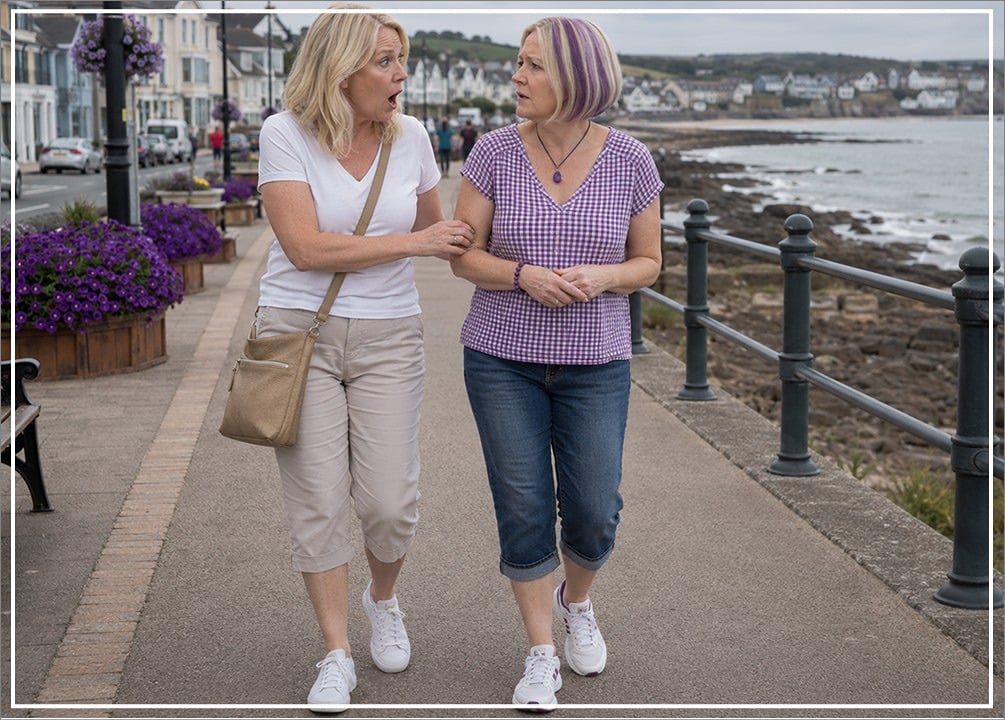
I met up with a friend recently for a chat and a dander. As we were walking, she began telling me about something that had happened at work a couple of months earlier. It had upset her at the time, and although several weeks had since passed, it was still very much present.
As she spoke, it was clear the situation hadn't stayed behind at work when she’d left the office that day. It had gone home with her, followed her through the weeks that came afterwards, and now here it was hovering beside us on our walk. I listened. There didn't seem much point interrupting. Sometimes people simply need the chance to empty out everything they've been carrying before there's room for anything else.
When she'd finished, she asked me what I thought. Part of my response was that, somehow, she needed to find a way to let it go. The change in her face caught me by surprise. She looked almost horrified. "Why should I let them off the hook?" she asked.
It took me a moment to realise we'd heard the same words in completely different ways. For me, letting something go has never meant pretending it didn't happen. It doesn't mean saying someone's behaviour was acceptable. It doesn't mean they escape any responsibility for what they did. I was talking about something entirely different. I was talking about something entirely different. I was talking about finding a way to move forward without allowing what happened to continue following you through life like a heavy chain.
Once I explained what I meant, she understood. Even then, she wasn't sure she could do it. She said the best she could promise would be to try.
About a week later we met for coffee. Before long, the same situation came into our conversation. Again, I listened. I didn't mention our previous conversation because I already had my answer. Whatever had happened at work was still with her.
That isn't a criticism. If anything, it reminded me how difficult these things can be. We don't simply decide one morning that something no longer hurts, and leave it behind. Some things take time. Perhaps she'd already begun that process. Perhaps she hadn't. I honestly don't know.
The conversation stayed with me after we went our separate ways. Not because of what had happened at her workplace, rather because it made me think about someone else: my Dad. Of everyone in my life, my Dad struggles the most to let things go.
It almost doesn't matter where a conversation begins. Somewhere along the way it will usually find its way back to his working life. He'll tell me about being overlooked for promotion. About being treated unfairly. About decisions other people made decades ago that still don't seem right to him. I've heard these stories so many times that I often know which one is coming after only the first few words.
It's strange because listening to the stories isn't actually the difficult part. The difficult part is hearing the anger and bitterness that still sit inside them.
Dad is eighty-six now. He took early retirement around thirty years ago before starting his own private practice. We're talking about experiences that belong to another chapter of his life entirely. And yet, when he tells those stories, they don't sound thirty years old. They sound present. They sound as though they happened yesterday.
As I've grown older, I feel that's the part I find hardest. Not that the stories are repeated. It's recognising that those experiences still seem to occupy so much of his life.
When I look at him now, I don't find myself wishing he'd stop telling the stories because I've heard them before. I find myself wishing they no longer had such a hold on him. I wish they no longer accompanied him into conversations about entirely unrelated things. I wish they hadn't followed him into retirement. I wish they hadn't become part of his everyday life for so many years afterwards.
Because, when I look at my Dad now, I don't just see someone remembering the past. I see someone with one foot in the present and one foot buried deeply in the past.
I don't think I always saw life this way. Looking back, I suspect there was probably a time when I thought much the same as my friend. Or perhaps even as my Dad. It's difficult to know because, when you grow up surrounded by certain ways of thinking, they rarely feel like beliefs at all. They simply feel normal.
Living abroad has changed many things for me over the years, often in ways I don't notice until much later. Some changes have been obvious. Others have crept in so gradually that I couldn't tell you exactly when they happened. This feels like one of those quieter changes.
Looking back, I suspect living away from Northern Ireland gradually gave me enough distance to question some of the things I'd simply absorbed whilst growing up. That isn't a criticism of Northern Ireland or the people who live there. It's simply my own experience.
Sometimes it takes stepping outside the environment that shaped you before you realise which parts truly belong to you and which parts you've simply carried because they've always been there. Had I stayed, I honestly think there's a good chance I'd still be carrying old hurts too. Not because of where I grew up, because I might never have thought to question whether carrying them was the only way.
Distance has a curious way of changing perspective. Sometimes it changes how you see the place you've left. Sometimes it changes how you see yourself. And sometimes it changes what you're willing to keep carrying.
Perhaps that's one of the reasons I now find myself supporting women living abroad through my 1-1 Personal Support. So many of the conversations we have aren't really about finding quick answers. They're about creating enough space for someone to lay down, for a little while, everything they've been carrying across countries, across relationships, across years of adapting and holding things together.
There's something profoundly different about being heard without needing to justify why something still matters or why something has become too heavy to carry alone. Those conversations have taught me that every person carries something different. Some burdens are recent whereas others have travelled alongside us for years. Others still have become so familiar that we no longer notice the weight until someone gently reflects it back to us.
As I thought about my friend and my Dad, I realised they weren't really connected by what had happened to them. They were connected by what was still with them afterwards. One had been carrying it for a couple of months. The other has been carrying it for decades.
Perhaps that's why I've come to see letting go differently over the years. To me, it has never been about saying someone else's behaviour was acceptable. Nor has it ever been about pretending something didn't hurt. It's simply about deciding that what happened no longer gets to accompany you everywhere you go.
That's forgiveness. Not setting someone else free. Just finally laying down the weight we've been carrying ourselves.