how things slowly became uneven
Other articles you might also enjoy:
perhaps my memory isn't the problem
When I met my husband, I was living in The Netherlands, working in corporate finance, the kind of role that comes with fixed deadlines and an expected level of pressure that doesn’t really change no matter where you work. Month-end closes, quarterly reporting, year-end statements; everything tied to timeframes that don’t move, and a pace that you’re expected to keep up with.
By that point, I’d already been managing Crohn’s disease for a few years. It didn’t sit well with that kind of environment, even when adjustments were made, even when I was reduced to part-time hours. The nature of the work didn’t shift just because I was working fewer hours, and the strain of trying to keep up with it was always there in the background. So, I’d already started looking for a way out, even though I didn’t fully know what that would look like yet.
Around that time, we decided to buy a house together. It wasn’t the kind of house most people would immediately choose, it hadn’t been cared for in over forty years and needed a lot of work before it was properly liveable. And yet, when we walked through it, we both felt something about it, something that made it feel right despite how much work and love it needed.
One part of it stood out more than anything else. It came with a business licence on the ground floor, a space that could be turned into something of my own. I’d already started retraining, moving away from finance, learning how to build something different, something that didn’t come with the same structure of deadlines and pressure. That space felt like an opportunity for a proper new beginning. So we bought it.
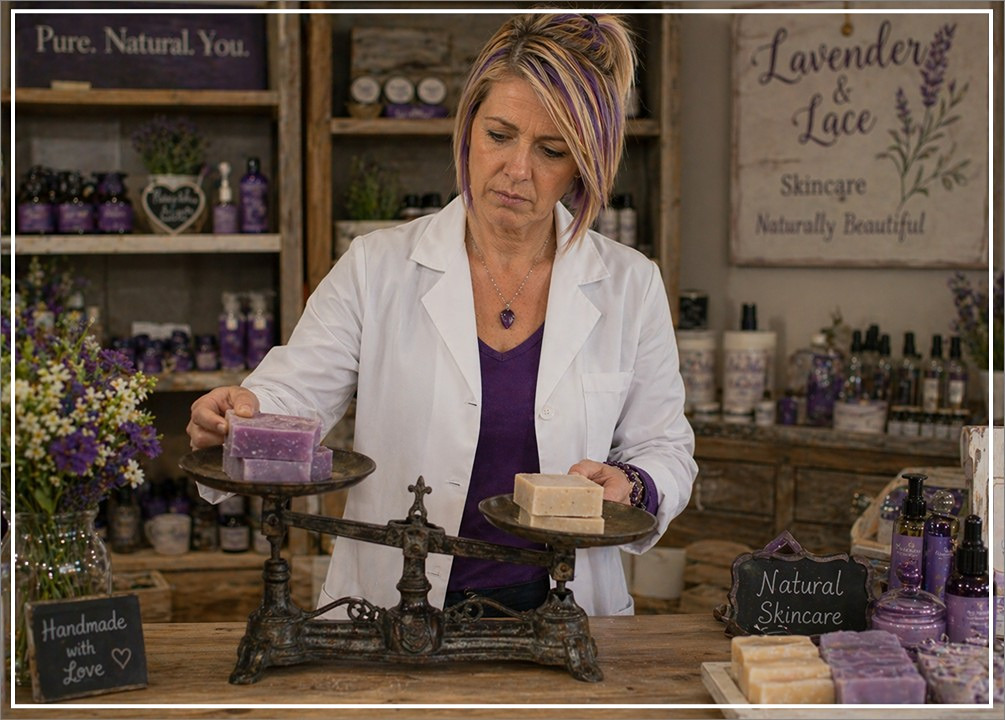
After months of renovating, we moved in, and I started my skincare business. At the time, it felt like a clear shift, stepping out of one way of working into another, moving towards something that felt more aligned with how I wanted to live. There was a sense of possibility in it, the idea that this could support me financially in the same way my corporate job had, maybe even better. The reality, however, was much more different.
I’d left a job that paid me a consistent salary each month and moved into something that brought very little in. Not nothing, just nowhere near enough to support myself. Without it being a big discussion or a defined decision, my husband took on all of the financial responsibility, covering the bills, the living costs, everything that needed to be paid.
At first, it just felt like a practical arrangement. He was employed full-time, I was building something new, and it made sense for things to sit that way for a while. There wasn’t anything unusual about it on the surface, no definitive moment where it felt like something had shifted beyond what was necessary at the time.
Prefer to watch? You can hear me talk about this below.
Then his situation changed. After just over a year, he was made redundant, part of a wider restructuring within his company. Because of the type of work he does, there aren’t too many places where those roles exist, so we widened the search, looking beyond where we were to see what else might be possible. That’s how we ended up moving to Switzerland.
Leaving The Netherlands meant more than just a change of location. It meant leaving behind the network I had started to build, even if my business wasn’t yet bringing in much money. It meant starting again, in a place where English wasn’t widely spoken in the same way, where there were language barriers that made even simple things feel more complicated. At the same time, the structure around my business shifted. Switzerland isn’t part of the EU, and most of my ingredients were coming from within it. Getting them across the border brought challenges I hadn’t dealt with before, delays, additional costs, things that made it harder to keep things running smoothly. And alongside all of that, my health started to decline again, the stress of the move showing up in ways that made it difficult to push forwards in the same way I had before.
Gradually, without a clear point where it was decided, I became more dependent on my husband financially. It’s not something that arrived suddenly. It built over time, through a series of practical decisions, adjustments, things that made sense in the moment. Each step felt reasonable on its own, even though when you look at it as a whole, you can see how the balance shifted without it ever being directly addressed.
That kind of dependency doesn’t stay contained to finances alone. It moves into other areas quietly, affecting how you see yourself, how you show up, what you feel able to say. My confidence shifted, not all at once, just gradually, in ways that were easy to overlook at first. My sense of freedom changed as well, especially when it came to money, knowing I didn’t have my own income to rely on. It also changed how I spoke within our relationship. There were things I didn’t say, not because I was being told not to, rather because something in me held back. It felt easier to keep things smooth, to not introduce tension, to not question or challenge in the same way I might have before. It wasn’t a conscious decision, it just became the easier way to be.
Over time, that creates a certain kind of dynamic. One relationship becomes the main place where everything is held, financially, practically, emotionally, and the balance within it shifts without either person necessarily naming it. It doesn’t happen because anyone sets out for it to be that way, it forms through circumstances, through choices that make sense at the time, through things that aren’t questioned because they don’t feel urgent enough to question. And once it’s there, it can be hard to see clearly from the inside. Because everything still functions, life continues, nothing outwardly breaks down. Internally, however, something feels slightly different, a weight that wasn’t there before, a quiet awareness that things aren’t as balanced as they once were.
This isn’t limited to money. You might recognise it in other ways, where one person becomes the place you go to process everything, where your world starts to centre around that one connection more than it used to. It can show up through emotional reliance, through practical dependence, through situations that slowly narrow where your sense of support comes from. And it doesn’t always feel wrong. That’s part of what makes it harder to name. It can feel close, supportive, even necessary at times, while also carrying something underneath it that doesn’t sit as comfortably.
There’s often a point where you become aware of it. Not because something has gone wrong, rather because you notice the shift in yourself, the way you hold back, the way you measure what you say, the way your sense of independence has changed without you fully deciding that it would. That awareness doesn’t immediately change anything. It simply sits there, alongside everything else, creating a kind of tension that isn’t always visible from the outside. You can see what’s happening, and still continue within it, because it’s not always clear what would need to shift or how that would happen.
Sometimes, having a space outside of that dynamic matters more than you realise. Somewhere that isn’t tied into the same patterns, where you can look at what’s happening without it being filtered through the relationship itself. That’s often where something like 1:1 support becomes relevant, not as a solution to fix anything, just as a place where you can see things more clearly than you can from within them.
If you look at your own life, there may be a place where something similar has taken shape. It doesn’t have to be in the same way as me, through the same circumstances as mine, it can just be in that quiet shift where one part of your life has started to carry more than it used to, and something else has quietly stepped back. Sometimes, the first thing that changes isn’t the situation itself. It’s simply seeing it as it is.