losing a part of you
I was back in Northern Ireland for a while, visiting my parents. In between the rain showers one day, I popped down into town for something quick, moving the way I always do, fast, focused, already halfway onto the next thing before I’ve finished the current one. As I was cutting through the street, someone caught my eye, just at the edge of my vision. I noticed they were looking directly at me in a way that made me slow down mid-step. It took a second to place her, a few years had passed. Finally, though, it clicked; she was an old school friend I hadn’t seen in a long time, someone I wouldn’t normally expect to run into because she had moved to England.
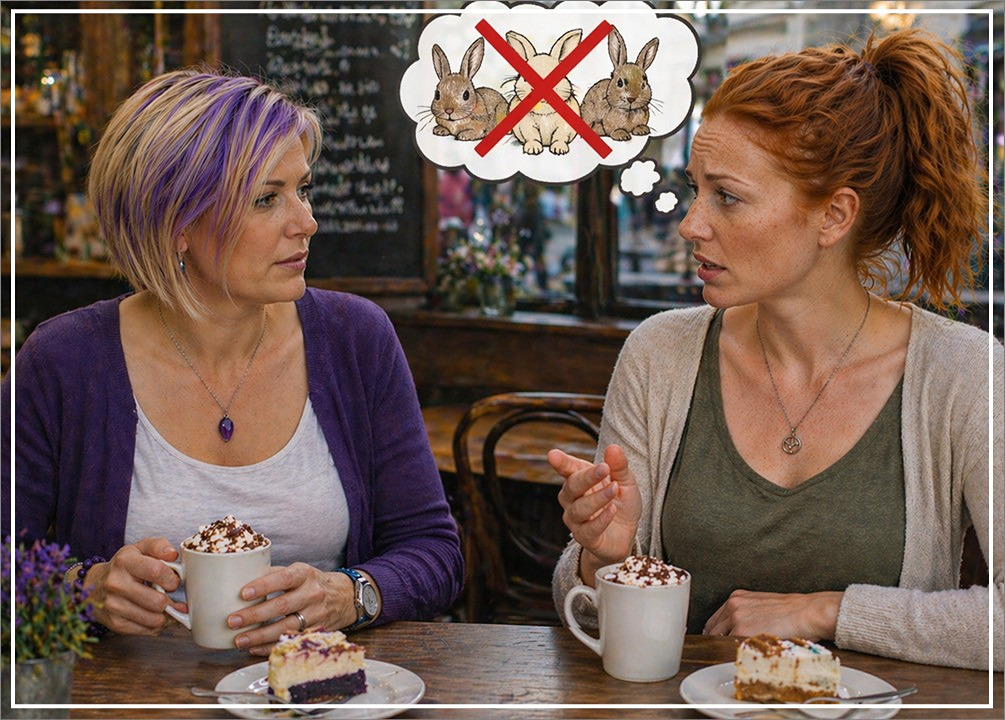
I stopped and walked over, shifting out of that rushed rhythm into something more present. We did the usual exchange, the quick “hey, how are you?” that fills the space before anything real is said. And then she started to ask, “How’s…” and paused, her face changing slightly as if she’d realised halfway through the sentence that something wasn’t right. There was a moment where she looked caught, almost panicky, trying to find a different way to finish what she’d already begun.
I knew exactly what she was about to say.
It was the question everyone always used to ask me without thinking, the one that came naturally because it was so obviously part of who I was. “How’s the bunnies?” It used to be automatic, almost expected, because if you know me at all, even just a little, you know how much they meant to me. They weren’t a small part of my life that sat quietly in the background; they were right at the centre of it, the part I spoke about often, the part I loved to share about, the part everyone associated with me straight away.
I was Viv, the bunny mummy.
That wasn’t something I said to myself in some ego-driven manner. It was just what was true, what felt natural, what fitted without question. The love I had for them, the care, the way they shaped my days and my decisions, it all became part of how I saw myself and how other people saw me too. There was a kind of pride in it, a softness as well, something that felt deeply personal and completely obvious at the same time.
And then they were gone.
It’s only been a year since Bobo passed, my final bunny, the one whose presence quietly marked the end of that entire part of my life. There wasn’t a sudden announcement that the identity had gone, no clear moment where it was formally left behind, just a gradual realisation that something which had once been constant was no longer there at all.
Standing in the middle of that street, in that brief, awkward pause, I could feel how strange it was, not just for her, for me as well.
Prefer to watch? You can hear me talk about this below.
She had to stop herself from asking a question that used to make complete sense, and I had to stand there knowing that the answer no longer existed in the way it once did. It was a small moment on the surface, something that could easily be brushed past, and yet it held something much bigger underneath it, something harder to put into words.
Because it’s never just about the loss itself. It’s about what that loss takes with it, the part of you that was tied into it, the version of you that existed because of it. When something like that is gone, you don’t just feel the absence of what you loved, you feel the absence of who you were in relation to it, and that’s not something that replaces itself quickly or neatly.
There’s a kind of emptiness that follows; steady, present, like a space that used to be filled without effort and now just sits there. You can feel it in small moments, in conversations that shift direction, in questions that are no longer asked, in the way something that once defined you is no longer part of how you’re seen or how you introduce yourself.
Other people only brush against that briefly. They might hesitate over a question, like my friend did, or adjust the way they speak to you without fully thinking about why, and then they move on. For them, it’s a moment of awkwardness that passes quickly. For you, it’s something you live with every day, in ways that aren’t always visible from the outside.
This kind of shift doesn’t only happen in one way. It can come through leaving somewhere that once felt like home, stepping away from a role that used to shape your days, changes in relationships, or simply reaching a point where something that once defined you no longer fits in the same way. For me, years of living abroad have also shown me how parts of ourselves can quietly be put aside while we’re busy adapting to everything life is asking of us. It doesn’t always come with a clear ending either. Sometimes it just fades out, leaving you aware that something has changed without being able to point to exactly when it happened.
Sometimes it isn’t that you don’t know who you are. Sometimes it’s that a version of you has gone, and nothing has replaced it yet, and you’re left in that in-between space where things feel less defined than they used to. There’s no clear label to hold onto, no immediate sense of what comes next, just a quieter awareness that something familiar is no longer there.
That space can feel strange in ways that are hard to explain. There’s a lack of shape to it, a sense of drifting slightly without the same anchor that used to be there. It can leave you feeling unsettled even if everything else in your life looks the same on the surface. Identity and purpose are often more connected than we realise, and when one shifts, the other doesn’t stay untouched.
It isn’t something that needs to be rushed through or fixed. However, it often does need space, attention, and sometimes support to sit with it properly rather than trying to move past it too quickly. There are moments where having someone else there, someone who can hold that space with you without trying to redefine it straight away, makes a difference in how you experience it.
Because when something like this happens, it isn’t always obvious at first. It can show up in small moments, like a question that isn’t finished, or a pause that wasn’t there before, and slowly reveal something deeper about what’s changed. Once you see it, you start to recognise how much of who you are has been shaped by things that don’t always stay.
There may be parts of your own life where something like this has already shifted. A role you no longer hold, a version of yourself that doesn’t quite fit anymore, something that used to feel central that now sits in the past. It doesn’t always come with a clear sense of what replaces it, and that can leave you in a space that feels unfamiliar in ways that are difficult to name.
And sometimes, it’s not about finding a new identity straight away. It’s about noticing the space that’s been left behind, and allowing yourself to be in it long enough to understand what it means for you now.

Continue Exploring When Part of Who You Were Is No Longer There
Losing a role, relationship or part of life that once helped define you can leave an unfamiliar space where your sense of self used to feel clearer. The Return to Self-Worth Soul-Layered Meditation offers gentle, self-guided support for reconnecting with yourself without needing to rush towards a new version of who you should be.