
no longer fully belonging anywhere
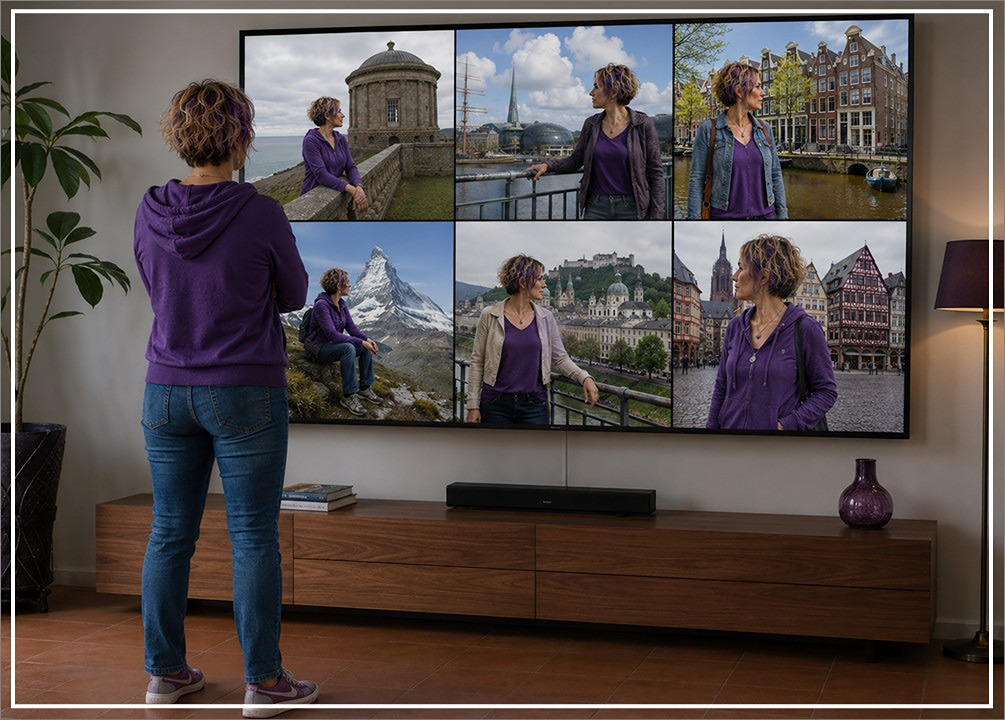
To many people looking in from the outside, my life probably does look amazing.
I’ve had friends and family say things like, “You have an amazing life”, or “You’re really living life to the full”, and I understand why they say it. From the outside, there’s travel, different countries, different cultures, new places to explore, the kind of life that can look expansive and interesting in a way that ordinary routine perhaps doesn’t. And to an extent, they’re right. There are parts of this life I genuinely value.
I do enjoy getting to know a culture by living amongst local people rather than visiting somewhere for two weeks and thinking I understand it. There’s something very different about learning the rhythm of a place through its supermarkets, public transport, seasons, bureaucracy, cafés, neighbours, and everyday frustrations. Living abroad has changed me deeply. I’ve grown, adapted, seen more of life, and experienced versions of myself I don’t think I would’ve met had I stayed in one place.
And at the same time, moving countries is exhausting. The packing, the unpacking, the practical dismantling of one life while trying to build another. All of it takes far more from you than people often realise. It isn’t just moving belongings from one apartment to another. It’s learning how to exist again in a new system, finding your way around streets that don’t yet hold any memory, working out where things are, how things work, what feels safe, what feels familiar, what will eventually become part of your ordinary day. It can take me months before I feel settled in a new place.
That hasn’t always been true in the same way. When I first moved abroad to Amsterdam back in 2002, it felt like home almost instantly. I don’t know whether that was because I was younger, or because it was my first move, or because something about that stage of life allowed me to land more easily. I just know that it felt different then. Amsterdam seemed to open itself to me quickly, and I stepped into it without the same hesitancy I have now.
Years later, the process feels slower. By the time we moved to Frankfurt six months ago, I knew enough about moving to know that arriving somewhere physically doesn’t mean you’ve emotionally arrived. You can learn where the shops are, find a walking route, work out the trains, unpack the kitchen, and still feel as if a large part of you is somewhere else. Frankfurt had only just begun to feel like it might become home when we got the news that we would probably be moving again.
Prefer to watch? You can hear me talk about this below.
hat does something to you. Because there’s a moment when a place begins to shift from being where you live to somewhere you might belong, and that moment is more fragile than it looks. You start to recognise corners without thinking. You stop checking maps for certain routes. You begin to feel a small ease in your body when you walk through familiar streets. And then, just as that ease begins to form, the possibility of leaving comes into the room and changes the way you relate to everything.
I don’t enjoy the physical part of moving at all. Packing boxes, deciding what to keep out and what to wrap away, living among half-finished rooms, trying to make a new apartment function while parts of your life are still taped shut, it all feels destabilising. Even unpacking carries its own kind of pressure because every item you put somewhere is a small act of saying, “this is where life is now”. And when you’ve had to undo that enough times, some part of you begins to hesitate before making things too settled too soon.
My body has also responded to moves in ways I can’t ignore. With previous relocations, the stress has brought my Crohn’s out of remission, which meant that instead of arriving somewhere and being able to explore, I was often largely stuck inside for the first few months. It wasn’t because I didn’t want to go out. It was because going out meant calculating toilets, distances, urgency, unfamiliar streets, and the awful fear of needing a toilet and not knowing where one was close enough.
I remember when we moved to Salzburg, one morning my husband was leaving for work and said, “You should get out of the house more and explore”. I know he meant well. He wanted me to experience the place we had moved to, and from his perspective, perhaps it looked simple enough. Open the door, walk outside, see what’s there. Yet even after years of living with me, he didn’t fully understand what Crohn’s made that simple sentence feel like. It put pressure on me because I already wanted to be able to go out, and being reminded of what I wasn’t doing only made the walls of the apartment feel closer.
That kind of isolation is difficult to explain. You’re in a new place, and you know you should be building some kind of life there, yet your body doesn’t feel safe enough to let you do that. You hear about exploring and meeting people and getting to know the city, while your own experience is much smaller and more cautious. The place outside your window might be beautiful, and still your world can shrink to the rooms you feel safe in.
Frankfurt was different physically. The move didn’t trigger my Crohn’s in the same way, and almost immediately I was out walking. That should’ve made things easier, and in some ways it did. My body allowed me more freedom here than it had in previous moves, which I don’t take lightly. Yet emotionally, Frankfurt was far harder.
I had left behind dear friends in Salzburg. Real friendships, not just people I occasionally saw. Friendships that had grown into part of the shape of my life there. Salzburg was also the place where all three of my bunnies passed, and that tied me to it in a way that went far beyond ordinary attachment to a city. It held the lives and deaths of beings I loved deeply, and leaving it felt like leaving part of that chapter behind while still carrying it with me.
So, when we moved to Frankfurt, I didn’t really want to go out and meet new people. Not because there was anything wrong with Frankfurt. Not because I didn’t understand that connection matters. I simply didn’t have the emotional space to start again in that way. Physically, I was here, walking the streets, learning the city, building routines, yet emotionally I was still very much tied to Salzburg.
That’s one of the stranger parts of living abroad over many years. You carry places inside you long after you’ve left them. Northern Ireland, Scotland, Amsterdam, Switzerland, Salzburg, Frankfurt, none of them sit neatly in the past. They remain layered inside you, each one holding a version of who you were, what you learned, who you loved, what you lost, and how you changed while you were there. And after a while, home becomes harder to define.
Northern Ireland is my birth country, though it doesn’t feel like home in the way it once might have done. I’ve changed too much. I don’t quite fit there in the same way, and perhaps I never would again, even if I returned. Yet the other countries I’ve lived in don’t fully feel like home either, because I haven’t been able to put down permanent roots in them.
That leaves a person in a strange emotional position. No longer fully belonging where you came from, and never quite belonging completely where you are. There’s a kind of freedom in that, and I can feel that too. I’ve often said I could live anywhere for a few years, and I believe that. I’m introverted, which probably makes certain parts of adaptation easier. I don’t need a huge social circle immediately. I tend to reconnect first with my work, my routines, my own inner world, and then slowly, if there’s time and space, other connections begin to form.
So, I’m not someone who needs to feel deeply rooted in one permanent place. That’s part of what makes this more complicated. I can tolerate untetheredness quite well, and there are parts of it that even suit me. I like knowing I can adapt. I like the expansion that has come from living in different cultures. I like the part of me that has become more flexible, more observant, more aware of how many different ways there are to live. And still, repeated rebuilding takes something out of you.
It asks you to keep beginning again. To keep finding your place. To keep learning the ordinary things other people don’t even have to think about anymore. It asks you to leave people behind, to turn beloved places into memories, to adjust your identity around yet another version of life.
That’s where the emotional cost sits for me. Not in loathing this life. Not in wishing I’d never lived abroad. More in recognising that expansion and displacement can exist together. You can be grateful for the life you’ve lived and still feel tired from the amount of times you’ve had to rebuild it. You can enjoy the untetheredness and still feel the ache of not fully belonging anywhere.
I think this is why spaces like 1-1 Support & Healing Sessions can matter for women living abroad. Not because anything needs to be turned into a problem, rather because there’re layers to this life that often don’t have anywhere to go. The grief of leaving, the tiredness of adapting, the quiet loneliness, the identity shifts, the way your confidence changes when you’re always starting again. Sometimes it helps to have a space where all of that can be spoken without needing to make it sound better than it feels.
Because this life does change you. It widens you, and it unsettles you. It teaches you how to adapt, and it asks you to let go more often than you might want to. It gives you a bigger view of the world, and sometimes leaves you wondering where, exactly, you belong within it. And perhaps that’s the quiet truth many women abroad carry. You can build a beautiful life in more than one place, and still feel the weight of never fully belonging to any of them.