the weight of 'what-if'
You know that feeling when a single thought starts looping in your mind - not a gentle loop that fades into the background, rather a relentless replay of a moment from the past? You don’t just remember what happened; you reshape it, bending and twisting it into the version you wish had been. You linger on that one tiny twist of an event that could have changed everything. You replay that single word you wish you’d said, the tone you wish you’d used. You revisit that other choice you wish you’d made, certain that if you had, the whole story would have turned out differently. You know what I mean – we’ve all done it.
It’s as if your mind has become a tireless movie editor, stuck in a dark editing suite, forever recutting the same scene with different endings, splicing together new possibilities in the hope of finding one that feels less painful, less disappointing, less unbearably heavy.
These are your hypothetical pasts - the “what ifs”. And they don’t just stop by for a fleeting visit. They move in. They haul in their crates of regret, their heavy trunks of missed opportunities, and they shove them into the corners of your mind until the space feels cramped and stale. You carry these weights with you everywhere - in your posture, in the heaviness of your breath, in the quiet exhaustion that hums beneath everything you do. And sometimes, you don’t even realise how much they’re slowing you down.
Hypothetical pasts aren’t the moments that actually happened; they’re the ones you’ve rewritten in your mind, polished and rearranged into the story you wish had played out. They’re the ghost versions of your life, the paths not taken yet endlessly walked in your imagination.
“If I’d chosen the other job, I’d be further ahead by now”
“If I’d spoken up, maybe they would have stayed”
“If I’d tried harder, things wouldn’t have ended that way”
The trouble is, these imagined realities can feel almost as tangible as the truth itself. Your brain doesn’t distinguish between what unfolded in real life and what you’ve rehearsed in vivid mental detail. If you run the scene clearly enough, your body reacts as though it’s happening again right now; your heart rate quickening, a knot tightening low in your stomach, a familiar ache settling into your shoulders like sandbags you can’t quite put down.
You’re not just remembering.
You’re reliving.
And because these are not fixed moments in history, rather fluid, ever-changeable versions, they never reach a conclusion. They’re slippery, impossible to pin down, and forever open to “editing.” The loop doesn’t end; it circles endlessly, each pass pulling more of your attention, draining your focus, and stealing the emotional energy you could be using to build what’s right there in front of you. Instead, you find yourself carrying the same invisible weight day after day, wondering why moving forward feels so slow.
Imagine for a moment that every “what if” you’ve ever clung to is a stone.
Some are small, like smooth pebbles tucked into your pocket, barely noticeable at first. Maybe it’s from that awkward conversation in the coffee shop where your words tangled and fell flat. Every so often, you turn that pebble over in your mind, imagining how much better it could have gone if you’d been sharper, wittier, more at ease.
Others are heavier, more jagged, the kind you feel pressing against your ribs. Perhaps it’s from the relationship that ended without warning, leaving you sifting through every detail. Should you have fought harder? Left earlier? Loved differently? The questions weigh more than the answers you never got.
And then there are the massive boulders, the ones you’ve been dragging for years. The career path you didn’t take. The dream you kept “for later” that somehow never came. The single decision that altered the entire landscape of your life. These aren’t just heavy; they anchor you in place.
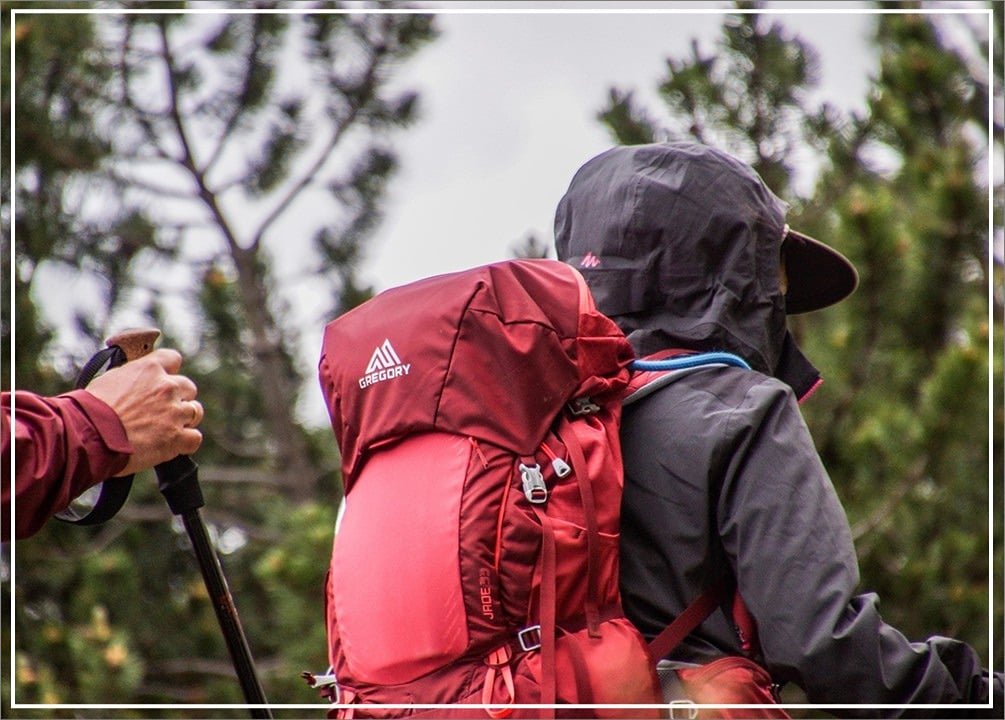
All of them live in the backpack you carry every day. And the strange thing about weight like this is how quietly it becomes part of you. You stop noticing its pull. You forget what it’s like to walk freely until, one day, you wonder why you’re so utterly, bone-deep tired.
Real events (even the most painful ones) have a certain solidity to them. They are like stones with sharp, defined edges. You can point to them on the calendar, name the day they happened, recall where you were standing, what the air smelled like, the exact way your chest tightened. They are fixed, immovable.
Hypothetical pasts, though, are different creatures entirely. They’re not solid stones, they’re shifting shapes in your hands. Every time you pick one up, it changes. One moment it’s smooth and light; the next, it’s rough and heavier than before. You rewrite the scene in your mind - sometimes the ending softens, sometimes it stings even more. You swap out the dialogue. You imagine yourself braver, quieter, more loving, less naive. Each version feels like it might be the one that finally gives you the relief you’ve been searching for.
Yet here’s the thing: hypothetical pasts have no edges. No end. They’re like trying to grip water, or like running on a treadmill with a backpack full of stones; your muscles ache, your heart races, your energy drains, and yet you haven’t moved an inch. That’s why they leave you so exhausted. You’re pouring your mental, emotional, and even physical strength into something that can never be finished, no matter how many times you turn it over.
You might not immediately connect the heaviness you feel today (the constant tiredness that lingers no matter how much you rest, the sharp edge of irritability that creeps into your tone, the way your focus seems to scatter like leaves in the wind) with your habit of revisiting the past. And yet the link is there, quietly tugging at you like the slow pull of gravity on a backpack you’ve been carrying too long.
You feel distracted because part of your attention is always busy elsewhere, running endless “what if” simulations in the background of your mind. It’s like trying to read a book while someone whispers another story into your ear; you can’t fully immerse yourself in either. You procrastinate because moving forward feels risky when your thoughts keep rewinding to analyse old steps, checking them for mistakes. You struggle to be present because you’re constantly splitting your mental energy between the now in front of you and the then that refuses to stay put in the past.
And perhaps most importantly… you cap your own joy. If you’ve convinced yourself there’s a “better” version of the past out there (the one that got away, the one that should have been), you also quietly convince yourself that nothing you have now could ever measure up. It’s like carrying stones labelled “not enough” that weigh down even your happiest moments, keeping them from ever feeling fully light.
There’s another reason these “what ifs” feel so heavy and leave you so drained - they quietly chip away at your self-trust, one imagined replay at a time. Every time you go back to a decision you made and declare it “wrong,” you’re not just rewriting the scene in your mind, you’re rewriting your belief about yourself. You’re telling yourself you can’t be trusted to choose well. That you should have seen the signs. That the version of you who stood in that moment was foolish, naive, careless, or blind.
Each stone in your backpack isn’t just regret over the event itself, it’s the label you’ve etched into it about your own judgment. You feel its weight every time you face something new, because deep down you’re carrying the memory of past choices as proof that you might mess it up again. So, when the next decision arrives, you hesitate. You analyse every possible outcome, searching for guarantees. You second-guess yourself before you’ve even begun.
The cruel irony? That fear of adding another “wrong” stone to your pack can keep you exactly where you are - stuck, unmoving, still carrying the same old weight, when the only way to truly lighten it is to step forward.
This might be the hardest truth to sit with, the kind that presses against your chest and makes you want to look away, and yet it’s also the truth that can crack open the door to your freedom:
The “better” version of the past you keep replaying was never real. It’s a mirage, stitched together from fragments - a little piece of selective memory here, a sprinkle of wishful thinking there, and a heavy dose of hindsight you didn’t have back then. You’ve built it like an intricate collage, smoothing the rough edges, brightening the colours, and removing the flaws until it feels flawless. However, no matter how vivid it seems in your mind, it’s still just that: imagined. It never existed outside of your thoughts.
And yet, you’ve been carrying it like a stone in your backpack, one so heavy it leaves you hunched without even realising it. You’re grieving something that lived only in the quiet corners of your imagination, not in the tangible world. The moment you truly accept this, the stone begins to lighten. You can still feel the ache, the longing, even the sadness, however you no longer feed the illusion that this “other” past is the life you should be living now. Instead, you finally make space for the one that’s real.
Letting go of hypothetical pasts doesn’t mean pretending they didn’t matter or pretending you were never changed by them. It means sifting through the experience with gentle, deliberate hands, keeping the wisdom like a polished stone in your pocket while setting down the boulder you’ve been dragging across miles of emotional terrain.
That relationship that didn’t work out? You don’t have to carry the late-night replay of every conversation, the exact words from the moment it ended, or the ache in your chest that followed you into sleep. You can hold onto the clarity it gave you; the realisation of what you need in love, the boundaries you want to honour, without letting that final scene loop endlessly in your mind.
That career move you didn’t take? You don’t have to keep replaying the cursor hovering over the unsent email or the “what if” that still clings to it like dust. You can keep the spark of insight it gave you; the way it helped you see what truly lights you up, while letting the rest fade into the background.
It’s like developing an old photograph: the main image comes into sharp focus, full of meaning, while the irrelevant, blurry edges dissolve. What remains is lighter, cleaner, and easier to carry.
There are quiet signs that begin to surface when you’re nearing the point of letting go - small yet unmistakable shifts that whisper you’re ready to set down some of the stones you’ve been carrying.
You’ll notice it when you grow weary of narrating the same story in your head, the one you’ve told yourself so many times the words feel smoothed down like river stones. You can recite it without thinking, yet it no longer gives you the release you once thought it might. You’ll feel it as a kind of restlessness, like walking the same looped trail day after day, the scenery never changing, your feet yearning for new ground. You might even catch yourself realising you haven’t dreamed fresh dreams in a while, that your gaze keeps tilting backward instead of scanning the horizon for what could be next.
If you recognise yourself in this, it’s not proof of failure. It’s proof you’re human. The mind clings to the past the way a hand grips the strap of an overstuffed backpack - convinced that holding on will protect you. However, there’s a difference between protection and freedom. One keeps you rooted to the spot under the weight you carry. The other lets you walk on, unburdened.
Carrying the weight of “what ifs” isn’t something you have to live with forever. You can begin to loosen your grip on them, one small action at a time. Think of it as carefully opening that overstuffed backpack you’ve been wearing for years, reaching inside, and choosing which stones to finally set down. Each step you take lightens the load, frees your energy, and makes more room for the life you’re living right now. Here’s how you can begin…
Name the Stone - when you feel yourself sliding into another “what if” loop, pause and identify exactly what you’re carrying. Give it shape. Give it weight. Maybe it’s the smooth, cold stone of “This is the version where I stayed in that relationship and we were happy,” or the jagged rock of “This is the path where I took the job and everything worked out.” Naming the stone is like holding it up to the light - you see it for what it really is, instead of letting it live unexamined at the bottom of your pack.
Ground in What’s Real - once you’ve named it, remind yourself with quiet certainty: “that version never happened. This is the life I have, and I choose to live it fully”. Feel your feet on the ground as you say it. Picture yourself setting that imaginary stone beside the path instead of hauling it forward another step. This moment, this air, this heartbeat, is what’s real.
Extract the Lesson - every stone you carry has something etched into it; a truth, a warning, a piece of wisdom. Instead of clutching the whole heavy weight, run your fingers over those engravings and take only what serves you now. Write it down. Let the insight be what you carry in your pocket, light and portable, while leaving the boulder behind.
Create a Release Ritual - your mind responds powerfully to tangible acts so write your “what if” on a piece of paper and burn it, watching the smoke rise as if the weight is lifting from your shoulders. Or close your eyes and imagine unbuckling your backpack, feeling the strain leave your spine as you lift a stone from its depths and set it down on the roadside. Notice the space that opens up in your body when it’s no longer there.
Redirect Your Energy - nature abhors a vacuum, and so does the mind. Once you’ve set down a stone, give yourself something fresh to hold. Pour your attention into the present - plant something in your garden, call a friend, lose yourself in creating something with your hands. Each time you choose to focus on the here and now, you’re shifting your energy from dragging the past to shaping the life you’re living.
Picture opening your eyes in the morning and feeling only the warmth of the day ahead - no low hum of regret whispering at the edges of your thoughts, no weight of “if only” pressing against your chest. The silence in your mind feels strange at first, like stepping into a room that’s been freshly cleared, the air light and open.
When you make a choice, it no longer trembles under the shadow of becoming “another mistake” to drag behind you for years. You move with more certainty, more trust in yourself. Each step feels easier, as if someone quietly lifted the invisible stones from your backpack; the ones that were never real, only imagined, yet somehow felt so heavy for so long.
And then you notice the shift: the world looks wider, colours seem sharper, and the path ahead stretches out with space you didn’t know you had. Your gaze is forward now, not twisted over your shoulder searching for a different past. In that moment, you recognise yourself, not the version weighed down by unreal histories, rather the one finally free to craft a present that’s alive, expansive, and undeniably yours.
You don’t have to keep dragging every “what if” you’ve ever picked up along the way, as if it’s your duty to carry them forever. You can pause. You can feel the straps of that heavy, invisible backpack cutting into your shoulders and you can decide to loosen them. One by one, you can take those stones out. The small ones you’ve almost forgotten you were carrying. The jagged ones that still cut when you touch them. The massive boulders you’ve been bent beneath for years. You can set them down gently, like laying something to rest, and step away.
Because here’s the thing: the past you’ve been mourning, the “better” version you replay, the alternate history you wish had been, that was never real. It’s a shadow you’ve been wrestling with, an echo of something that only lived in your mind. You can grieve the idea of it, yes, however you no longer have to let it claim your energy, your focus, your joy.
And when your hands are finally empty, when your back feels lighter, you’ll notice something: the space you’ve created is wide open for what comes next. The future you can shape is not imaginary, it’s solid, vibrant, and entirely in your hands.
Some weights are invisible, yet you feel them in every step you take: the “what ifs”, the alternate endings, the people and moments you’ve been carrying far too long.
Letting them go isn’t about forgetting. It’s about reclaiming the energy, clarity, and peace they’ve quietly stolen from your present. It’s about feeling lighter, freer, and ready to step forward without the pull of old ties.
If you’re ready to open that space within you, imagine the insight and clarity that could come from seeking…
more helpful resources...
self-healing bundle: growth mindset
collection of self-help aids to change your mindset, energetic relationship, and subconscious attitude to creating a supportive growth mindset
self-healing bundle: manifesting
A collection of self-help aids and tools designed to change and shift your energy and mindset as you focus on manifesting your dreams and desires
self-healing bundle: boundaries
A collection of self-help aids and tools designed to support and guide you in establishing, upholding and maintaining your personal boundaries