
Are You Storing More Than Just Old Photos?
Other articles you might also enjoy:
You probably know what it means to hoard physical things - a cupboard crammed with clothes you haven’t worn in years, drawers stuffed with old birthday cards, shelves lined with souvenirs from places you barely remember visiting. Every item tells a story, and while some of those stories still make you smile, others have long since lost their warmth. Physical clutter is easy to spot. It takes up space you can see, touch, and trip over when you’re trying to find something you actually use.
However, there’s another kind of clutter; one that doesn’t live on your shelves or in your drawers. It’s far more subtle, yet infinitely heavier to carry. This is the clutter that lives inside you. It shows up in the heaviness in your chest, in the thoughts that circle at night, in the way certain names, dates, or places still trigger an old sting. It’s the kind you store in your mind, in your heart, and in the way you move through the world.
This emotional clutter can take many forms: old hurts that never healed, grudges you’ve carried for so long they feel like part of you, regrets that replay like a scene on loop, and “what ifs” that keep you anchored to moments long gone. They’ve been with you for so long that you might mistake them for harmless background noise. And yet they’re not. They weigh you down quietly, stealing space from the joy, clarity, and lightness you could be living with right now.
Picture yourself carrying an invisible backpack - one you never consciously chose, yet somehow it’s been strapped to your shoulders for years. Every time someone hurt you, every time a chapter in your life ended abruptly, every time you reached for closure and came up empty-handed, another object found its way into that bag. Sometimes it was a jagged rock etched with the word ‘betrayal’, sharp enough to catch on your fingers if you touched it too closely. Sometimes it was a heavy stone carved with ‘regret’, its weight pressing deep into the bottom of the pack. Other times, it was a faded, crumpled letter marked ‘unanswered questions’, edges curled like they’d been handled too many times.
In the beginning, you hardly felt it. You told yourself you were strong enough to carry it all, that this was just part of life. However slowly, imperceptibly, the weight grew. Your shoulders began to slope under its pull. Your steps became shorter, your pace slower. Even on nights when you slept for hours, you woke with the same deep fatigue, as though rest could never quite reach you.
That’s the thing about emotional hoarding - it doesn’t sit passively in some quiet corner of your mind. It seeps into the way you see the world, into the way you hesitate before saying yes to new opportunities, into the walls you build around your trust. It’s not just the backpack on your shoulders, it’s the lens through which you experience your entire life.
You might imagine emotional hoarding as something reserved for grand betrayals or heart-shattering endings, the kind of pain that turns life upside down overnight. However more often, it slips in quietly, disguised as something small, something almost ordinary. It can take the shape of replaying an old conversation over and over in your head, each time rewriting your lines, wishing you’d spoken with more courage or more grace. It can linger as a faint yet stubborn sense of injustice from years ago - the kind where the edges of the story have blurred, though the bitterness still sits sharp in your chest.
It can be the subtle avoidance of a street, a café, or even a song because it carries the echo of “that time.” It can hide in the mental list you keep (the one no one else sees) of the people who have wronged you, a list you silently add to without realising how heavy it’s become. It can resurface in the sudden heat on your cheeks when you remember a moment of humiliation or failure, as if it unfolded only yesterday instead of years ago.
Sometimes, emotional hoarding convinces you it’s self-protection… “If I remember this pain, I’ll never let myself be hurt like that again”. However, the truth is, preserving the past like this doesn’t just shield you from hurt, it builds walls so high they keep out joy, connection, and the life you could be living now.
If emotional hoarding is so heavy, why not just shrug off the straps, drop the bag, and walk away?
Because if it were that easy, you’d have done it already. The truth is, the past can feel like more than just a weight, it can feel like evidence. Evidence that you were wronged. Evidence that you endured something most people will never fully understand. Evidence that your feelings were (and still are) real. And wanting that truth to be seen is not wrong; it’s deeply human.
Sometimes, though, in the effort to make sure those experiences are never forgotten, you keep the story on a constant loop. You revisit it so often that it becomes the room you live in, the walls papered with the same scenes, the same conversations, the same emotions, over and over. It can feel safer to stay inside that room than to step out into the unknown.
You might also carry the quiet fear that letting go would somehow diminish it all, that if you loosen your grip, it means it didn’t matter, or worse, that it didn’t hurt. The thing is: letting go is not erasure. It is a deliberate act of sovereignty. It’s the moment you decide the past can remain part of your history, although it will no longer be the architect of your future.
Sometimes, you don’t even realise how much you’ve been carrying until life quietly (or not so quietly) points it out. A new relationship begins to bloom, and instead of leaning into its warmth, you feel the cold fingers of old fears wrapping around your heart, fears you were certain you’d buried long ago. A promising opportunity lands in your lap, yet you hesitate, hearing the faint yet insistent whispers of a past failure telling you not to risk it. Or maybe, mid-conversation, you catch yourself speaking about something that happened years ago, only to notice the emotion rising in your voice and tightening your chest as though it unfolded last week.
These are the moments when the past taps you on the shoulder, reminding you it’s still taking up space inside you. They’re clues that your “emotional cupboards” are stacked high and spilling over, each shelf lined with memories, resentments, and fears that haven’t been cleared. And just like a home so cluttered you can’t move without bumping into something, a heart and mind overcrowded with yesterday leaves very little space for tomorrow. When there’s no room for anything new, you can’t help but keep circling the same rooms, the same patterns, over and over.
Letting go isn’t just about chasing the vague idea of “feeling better.” It’s about creating a clearing - a wide, open expanse within yourself where you can finally breathe without the past pressing on your chest. It’s about giving yourself room to receive what life is offering now, to move forward without dragging behind you the rusted anchor of stories that ended long ago yet still pull at your every step.
When you release an old grudge, it’s not just the other person who disappears from the well-worn stage of your mind. You dissolve the slow, relentless drip of resentment that’s been quietly siphoning your energy day after day. When you let go of regret, you stop staring through the keyhole at the door that slammed shut years ago, and you notice (maybe for the first time in a long while) that other doors stand wide open, waiting. When you finally loosen your grip on every painful “what if,” you stop acting as a sentry at the gates of joy, blocking the very moments and opportunities your heart aches for.
And here’s the magic: the lightness you feel isn’t only in your mind. It ripples through your body - your shoulders soften and drop, your breath sinks deeper into your belly, your sleep becomes easier, your steps feel freer. It’s as though every cell in you exhales and says, ‘Finally’.
From a spiritual perspective, holding onto the past is like clutching onto energy that has long since expired. Once, it may have carried meaning, even beauty. Now, though, it sits heavy and stagnant, no longer nourishing your spirit. In the unseen currents of life, energy is meant to flow, to circulate freely, to be released when its time is done, so something new and vital can take its place. When you refuse to let it move, it grows stale, like a stream blocked by fallen branches, the water behind it turning murky and still.
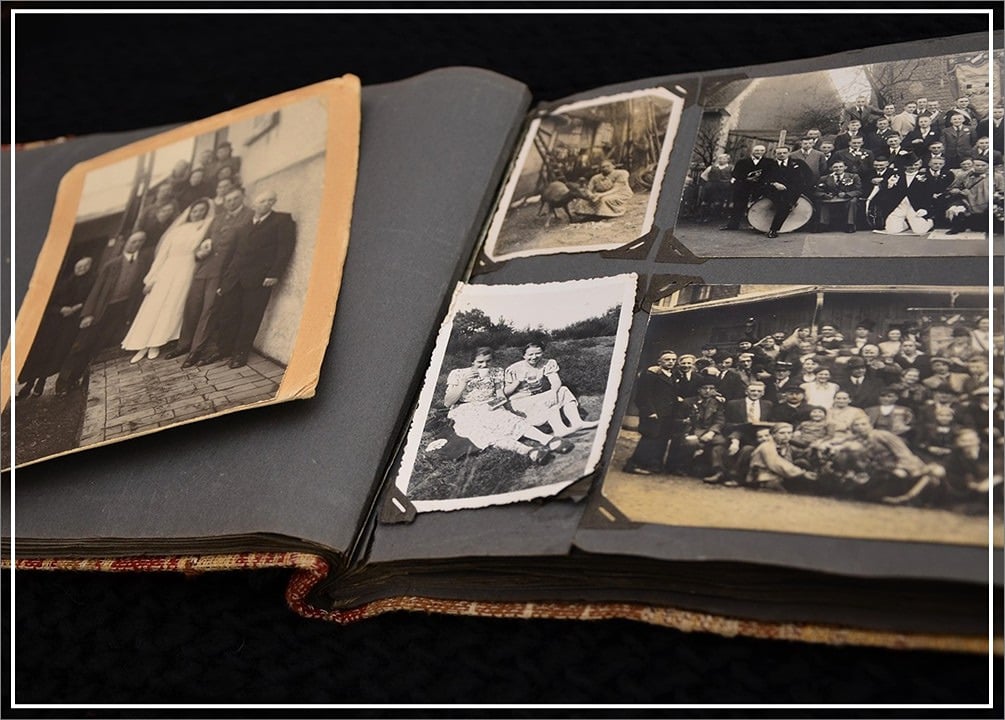
It’s like keeping a stack of old photographs that have long since faded. You remember the moment they were taken, the laughter in the air, the warmth of the sun on your face, the way your heart swelled when you held them in your hands for the first time. Now, though, the edges are curling, the colours are dull, and the images are blurred with time. And yet, you keep them tucked away in a drawer, telling yourself it’s hard to let them go because they once captured a joy you never wanted to lose.
The truth is, those photographs can no longer bring you the same joy they once did. The moment they captured has already been lived, already shaped you, already given you what it could. And until you release your grip on those faded images, until you stop holding them as if they’re the only proof that that moment mattered, you cannot open the album for new memories to be made. Letting them go doesn’t erase the joy they once brought; it simply clears the space for fresh snapshots of life - vibrant, colourful, and alive - to find their way into your hands.
Some memories feel like old photographs you’ve kept tucked away in a box for years. Even the painful ones can seem too precious to part with, because they tell part of your story. You look at them and remember how those moments shaped you - the heartbreak that deepened your empathy, the mistake that taught you humility, the loss that made you treasure connection more fiercely. And it’s true: each of those snapshots holds a lesson, a thread in the fabric of who you are today.
However, the art lies in knowing how to frame those memories so they don’t dominate your present. You don’t need to leave every photograph scattered across the walls of your mind, staring at you every time you look up. Instead, you can place them carefully in an album, honouring what they gave you while closing the cover when you choose. The image remains, the wisdom remains, however, the sting no longer bleeds into every conversation, every decision, every dream you dare to imagine. This way, you carry forward the light in the picture without endlessly reliving the shadows.
You might think you need an apology, an explanation, or one last heartfelt conversation to finally close the chapter. However, closure, much like an old photograph you keep returning to, can shift and blur with time. The version you imagine - crisp, perfectly framed, offering all the clarity you crave - may never develop the way you expect. Sometimes the image remains incomplete, the edges frayed, the faces half in shadow.
So instead of waiting for someone else to hand you that perfect picture, you can create your own. Write a letter you’ll never send, capturing every word you wish you’d spoken, as though you’re developing your own print of the moment. Journal the conversation you longed for, letting the ink soak into the page like the tones of a photograph settling into permanence. Try a ritual of release through burning a piece of paper with the words or memories you’re ready to let fade, or imagine yourself placing the picture gently into the wind, watching it drift from your hands.
You don’t have to clear the whole album in one sitting. Letting go is often like slowly loosening your grip on a stack of photos, allowing each one to slip away when you’re ready. Some may take longer to release than others, however each one you let go creates more space in your heart for the moments still to come.
Imagine waking up and realising that the first image in your mind is a fresh, vivid snapshot of today; not the same worn, dog-eared photograph you’ve been carrying for years. The moment your eyes open, you’re here, now, instead of flipping through the mental album of something that happened, say, five years ago.
Imagine walking into a crowded room and no longer scanning the faces like you’re searching an old photograph for the person who hurt you. Instead, your gaze is wide open, ready to take in new scenes, new moments worth capturing.
Imagine feeling joy as if it’s a brand-new print, colours rich and edges sharp, without the faded overlay of fear that it could be taken from you at any second.
When you stop hoarding the emotional photos that weigh you down, life feels more spacious, like you’ve cleared the clutter from a dusty shoebox and made room for new, breathtaking images to arrive. The world’s colours seem brighter, the details sharper. You begin noticing possibilities instead of cataloguing problems. And most importantly, you start recognising yourself in the mirror again - not the version frozen in an old picture, defined by what happened, rather the living, breathing you who is free to develop the story of what comes next.
Think of your inner world as an old family photo album, one you’ve been adding to for years. Every thought, feeling, and belief is like an image tucked into its pages. Some photos are vibrant, full of life, while others are faded, bent at the corners, or stained with time. If the album is crammed so tightly with these old, worn-out pictures that you can barely close it, there’s no room to slip in anything new.
However, the moment you begin sorting through those pages, even if you only remove a few at a time, the energy shifts. The heaviness in your hands lessens. The air feels clearer, as though the dust that’s been settling for years has finally lifted. You start noticing blank pages waiting for fresh images. The weight of the past loosens its grip, and suddenly you can move through your days without tripping over yesterday’s snapshots.
That’s what letting go of the past truly gives you: space. Not a hollow, echoing absence, instead an open, inviting album ready to be filled. Space for new photographs, for moments you’ll look back on with warmth, for memories that aren’t overshadowed by what came before. It’s the freedom to start curating the story you actually want to tell.
Some patterns run deeper than we realise. They hide in the way you react, the choices you make, even the opportunities you quietly turn away from. Left unchecked, they keep you living in echoes of the past rather than the truth of today.
The weight of old stories can be subtle, yet relentless, shaping how you see yourself and the life you believe you deserve. Freedom begins the moment you decide you no longer want yesterday to dictate tomorrow.
If your heart stirs at the thought of a lighter, freer future, perhaps it’s time to begin seeking…
more helpful resources...
self-healing bundle: growth mindset
collection of self-help aids to change your mindset, energetic relationship, and subconscious attitude to creating a supportive growth mindset
self-healing bundle: manifesting
A collection of self-help aids and tools designed to change and shift your energy and mindset as you focus on manifesting your dreams and desires
self-healing bundle: boundaries
A collection of self-help aids and tools designed to support and guide you in establishing, upholding and maintaining your personal boundaries